Judgment Liquidation Guide: Turn Court Judgments Into Cash
Follow this judgment liquidation guide to convert uncollected civil judgments into immediate cash with step-by-step instructions for a smooth, compliant sale.
Great Lakes Strategic Capital
Great Lakes Strategic Capital

Unpaid court judgments can severely impact your financial health, particularly for landlords and contractors in Michigan facing urgent cash flow needs. As expenses accumulate and funds remain tied up in legal claims, finding a pathway to immediate liquidity becomes critical. By ensuring your documentation is accurate and partnering with a reputable judgment buyer, you can convert your outstanding judgments into real cash. The cornerstone of this process is well-prepared, certified judgment documentation, which facilitates swift liquidation.
Table of Contents
- Step 1: Prepare Required Judgment Documentation
- Step 2: Verify Judgment Eligibility for Liquidation
- Step 3: Contact a Trusted Judgment Buyer
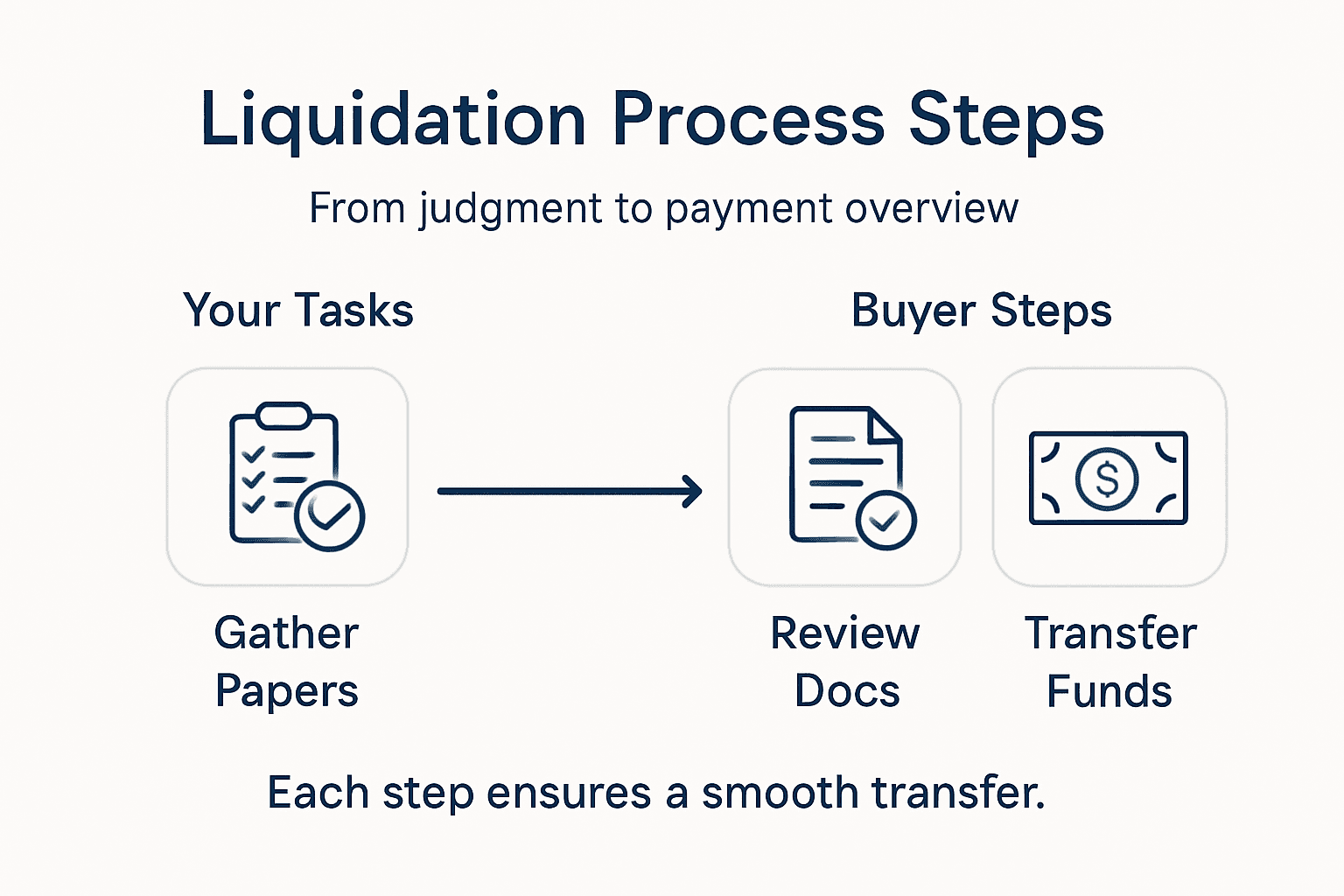
- Step 4: Complete the Assignment and Transfer Process
- Step 5: Confirm Payment and Close Out Judgment
Quick Summary
| Key Point | Explanation |
|---|---|
| 1. Gather Essential Documentation | Collect the original court judgments, certified copies, case details, and contact information for all parties involved. |
| 2. Assess Judgment Liquidation Eligibility | Evaluate factors such as the award amount, age, and debtor’s assets to determine if your judgment can be liquidated for cash. |
| 3. Find a Reputable Judgment Buyer | Research buyers with legal certifications and positive reviews, presenting complete information to secure the best offer. |
| 4. Execute Transfer Documentation | Prepare the original judgments, signed assignment documents, and notarized agreements to ensure a smooth transfer process. |
| 5. Verify Payment and Finalize | Confirm the payment amount, obtain receipts, and check with the court to ensure the judgment is marked satisfied. |
Step 1: Prepare Required Judgment Documentation
Successful liquidation of your court judgment begins with thorough preparation of the necessary documentation. This involves compiling and organizing all official court records essential for a seamless judgment selling process. You will need to secure several crucial documents, including:
- The original court judgment document
- Certified copies obtained from the court clerk
- Evidence of judgment entry in compliance with Federal Rule of Civil Procedure 58
- Comprehensive case file information
- Contact details for all involved parties
Start by requesting a certified judgment document from the court clerk’s office, usually for a nominal certification fee. It is wise to acquire multiple certified copies—typically two to three—since various financial institutions may require their own originals.
Judges promptly sign and file judgments; therefore, act swiftly to secure your certified documents.
Scrutinize each document for accuracy, ensuring that all names, case numbers, and monetary amounts are correctly stated. Any errors could complicate or delay the liquidation process.
Pro Tip: Request both digital and physical copies of your judgment documents for optimal flexibility and backup.
Step 2: Verify Judgment Eligibility for Liquidation
Not all judgments are equal in terms of ease of liquidation, making it essential to assess whether your specific judgment is amenable to conversion into cash. Several key factors can influence your judgment’s eligibility for cash liquidation:
- Total monetary award amount
- Age of the judgment (many states enforce specific time limits)
- Clarity and completeness of legal documentation
- Status of the debtor’s assets
- Potential complications from bankruptcy proceedings
Begin by inspecting your original court documents to verify that your judgment aligns with fundamental liquidation criteria. Pay close attention to the language of the monetary award and any restrictions mentioned, which may hinder or prevent swift conversion into cash.
Not every judgment is fluid for liquidation purposes. Clear terms and sound documentation enhance your likelihood of a successful conversion.
Engage the court clerk or a judgment purchasing professional to evaluate the specifics of your case. These experts can provide critical insights into your judgment’s eligibility for liquidation and guide you toward appropriate next actions.
Pro Tip: Request a full case file review to identify any hidden complications that might influence your judgment's cash value.
Below is a comparison of how different types of judgments impact liquidation potential:
| Judgment Type | Liquidation Complexity | Average Time to Cash | Common Barriers |
|---|---|---|---|
| Civil Money Judgment | Low | 2-6 weeks | Debtor asset search, documentation |
| Small Claims Judgment | Moderate | 4-12 weeks | Limited debtor resources |
| Business Debt Judgment | High | 8-16 weeks | Bankruptcy, corporate structure |
| Divorce Settlement | Variable | 3-20 weeks | Ongoing appeals, asset division |
Step 3: Contact a Trusted Judgment Buyer
To successfully convert your court judgment into cash, it is vital to identify a trustworthy judgment buyer who is well-versed in the intricacies of judgment liquidation. This phase involves interacting with professionals who can unlock the financial potential of your legal document. When evaluating potential judgment buyers, prioritize the following criteria:
- Verifiable legal credentials
- Transparent fee structures
- Established track record with cross-border transactions
- Clear communication protocols
- Positive reviews and testimonials from clients
- Professional licenses and relevant accreditations
Reach out to selected judgment buyers with a comprehensive package containing your certified judgment documents, case details, and your specific financial expectations. Be prepared to answer detailed inquiries regarding the history and collectability of your judgment.
Your diligence in selecting a judgment buyer crucially affects the financial outcome of this process.
Consider scheduling consultations with multiple firms to compare offers and gauge their approaches to judgment liquidation. During these discussions, ask pointed questions about their success rates and typical turnaround times.
Pro Tip: Seek references from clients who successfully converted similar judgments to test the buyer’s legitimacy.
Step 4: Complete the Assignment and Transfer Process
The process of transferring your court judgment necessitates meticulous attention to legal documentation and adherence to procedural guidelines. This crucial step enables the transformation of your judgment from a mere legal artifact into a financial asset that can be sold. To execute a successful assignment and transfer, you will need to compile the following essential documents:
- Original court judgment with the official seal
- Signed assignment document
- Notarized transfer agreement
- Proof of legal transfer documentation
- Identification documents for all parties
- Comprehensive case history records
Thoroughly review each document for accuracy, as even a minor oversight could jeopardize the entire transfer process. Collaborate closely with your judgment buyer to ensure that their documentation prerequisites are met and every detail is seamlessly addressed.
Accuracy is paramount. An incorrect signature or incomplete form could unravel your judgment liquidation plans.
After collecting all necessary paperwork, arrange for a formal document review with your judgment buyer. This meeting facilitates an overview of each document, allowing you to rectify any potential issues before the transfer occurs.
Pro Tip: Create digital and physical copies of all transfer documents prior to submission to safeguard your financial and legal interests.
Step 5: Confirm Payment and Close Out Judgment
The culmination of your judgment liquidation journey requires precise verification of all financial and legal elements to ensure successful transaction completion. This vital stage transitions your judgment from an unresolved legal document to a finalized financial settlement. Follow these critical verification steps to effectively close out your judgment:
- Confirm the total payment amount
- Request official payment documentation
- Review contract closeout procedures
- Obtain written confirmation of payment
- Document the transaction details thoroughly
- Secure all final documentation in a safe place
Pay careful attention to the payment process to ensure that you receive a formal bank transfer confirmation or a certified check that clearly indicates that the full judgment amount has been paid. Always cross-check the received amount against your original judgment to affirm total financial reconciliation.
Meticulous attention to financial details is essential to avoid potential conflicts or contested payments later.
Upon receipt of payment, update your financial records accordingly and file all related invoices and documents securely. Contact the court that issued your original judgment to confirm that it can now be officially marked as satisfied or settled.
Pro Tip: Maintain a dedicated file for all judgment liquidation documents for a minimum of seven years to protect your financial and legal interests.
The following table outlines the key parties involved in the judgment liquidation process and their respective roles:
| Party | Role in Liquidation | Critical Responsibilities |
|---|---|---|
| Judgment Creditor | Initiates the liquidation process | Collects necessary documentation and confirms receipt of payment |
| Judgment Debtor | Responds to the claim | Provides asset information and satisfies the debt |
| Court Clerk | Validates the documents | Certifies the judgment and monitors case status |
| Judgment Buyer | Facilitates fund transfer | Assesses eligibility and executes the purchase |
Unlock Immediate Cash for Your Court Judgments with Great Lakes Strategic Capital
If you are faced with the difficult task of transforming a court judgment into cash, you likely understand the complications and delays that can accompany lengthy collection efforts. While this guide outlines key steps such as preparing documentation and verifying judgment eligibility, these processes can still slow down your cash inflow. At Great Lakes Strategic Capital, we specialize in acquiring non-commercial civil judgments from across the nation, providing judgment creditors with a prompt and dependable means of converting uncollected awards into advance cash without the hassle.
Our expert team addresses the significant hurdles of judgment eligibility verification and ensures that the assignment process is handled with precision, facilitating a seamless transaction. We serve a wide range of clients, including individual creditors, landlords, contractors, and legal professionals, throughout Michigan and beyond. Discover how our judgment purchasing services can streamline your experience and restore your financial peace of mind.
Take control of your financial future with Great Lakes Strategic Capital today.

Do not let unpaid judgments linger—convert your court judgments to cash quickly. Visit our website today and connect with a trusted partner who understands the complexities of judgment liquidation and can provide immediate financial solutions.
Frequently Asked Questions
What documents do I need to prepare for judgment liquidation?
To liquidate your court judgment efficiently, assemble the original court judgment document, certified copies, proof of judgment entry, case file information, and the contact details of all parties involved. Begin by requesting these documents from your court clerk’s office to facilitate an efficient process.
How can I verify if my judgment is eligible for liquidation?
Assess your judgment's eligibility by examining the total monetary award, judgment age, clarity of documentation, and the status of the debtor’s assets. These elements will confirm whether your judgment meets the necessary criteria for liquidation, as some judgments carry restrictions that complicate the process.
What should I look for when choosing a judgment buyer?
When selecting a judgment buyer, confirm their legal credentials, fee structures, and their history with prior transactions. Schedule discussions with several buyers to compare offers and gain insight into their experience and liquidation success rates.
What steps are involved in transferring my court judgment?
The transfer process involves accumulating the original judgment, a signed assignment document, a notarized transfer agreement, and identification for all involved parties. Ensure all documentation is precise, as even minor mistakes can delay the transfer process. Work closely with your judgment buyer for expert guidance.
How do I confirm payment after the judgment is liquidated?
To verify payment, ensure that the total received aligns with your judgment value and request thorough payment documentation. Maintain a record of this transaction and its associated documents, as these are essential for resolving any potential disputes about the payment.
How long does the entire judgment liquidation process typically take?
The duration of the judgment liquidation process may vary based on multiple factors, including judgment type and the efficiency of the buyer. As a general estimate, expect the completion timeline to span anywhere from 2 to 20 weeks. It is advisable to stay proactive in your communication with the buyer throughout this period.
See what your judgment is worth — free evaluation
No upfront fees. No collection hassle. Get a cash offer instead of waiting years.